Calligraphic Bristle Brush: Elevating Digital Art with Authentic Texture
The gap between traditional media and digital design has narrowed significantly, yet many artists still struggle to replicate the organic imperfection of hand-drawn work. This is where a Calligraphic Bristle Brush becomes an indispensable tool in your creative arsenal. Unlike standard vector brushes that often feel sterile or overly uniform, these specialized tools mimic the natural variation of ink flow and bristle texture. When you integrate a comprehensive set of calligraphic and bristle brushes into your workflow, you are not just adding a filter; you are introducing a layer of human touch to your digital compositions.
For professionals working in Adobe Illustrator, the ability to switch seamlessly between crisp typography and textured illustration is crucial. A robust library containing 44 calligraphic brushes and 40 bristle brushes offers the versatility needed to tackle diverse projects. Whether you are crafting a vintage logo, illustrating a children’s book, or designing custom lettering for a brand identity, these tools provide the nuanced control required to make digital art feel alive.
Bridging the Gap Between Vector Precision and Organic Flow
One of the primary challenges in vector-based design is maintaining scalability without losing character. Standard paths are mathematically perfect, which can sometimes result in designs that look cold or manufactured. By utilizing a Calligraphic Bristle Brush, designers can introduce subtle irregularities that mimic the behavior of real-world materials. The bristle brushes, in particular, excel at creating textured strokes that resemble dry brush techniques, charcoal, or rough ink applications.
This duality is essential for modern illustrators who need their work to look hand-crafted while remaining fully editable. Since these brushes are compatible with Adobe Illustrator CS6 and above, they fit into established professional workflows without requiring a complete software overhaul. The AI and EPS formats ensure that every stroke remains a vector path, allowing for infinite scaling without pixelation. This means you can use a single brush stroke on a business card or expand it to cover a billboard, retaining all the intricate textural details.
Real-World Applications for Designers and Artists
The utility of these brushes extends far beyond simple sketching. Different industries and creative roles benefit from specific aspects of the set. Here is how various professionals can leverage these tools in practical scenarios:
- Brand Identity Designers: When creating logos for artisanal brands, such as craft breweries, bakeries, or boutique hotels, a clean sans-serif font often feels out of place. Using calligraphic brushes allows designers to craft custom logotypes that convey heritage and craftsmanship. The 44 calligraphic options provide a range of styles from elegant scripts to bold, rustic markers.
- Book Illustrators: Children’s books and graphic novels often require a warm, inviting aesthetic. Bristle brushes are perfect for creating background textures, foliage, or clothing fabrics that need to look soft and tactile. The variation in opacity and width helps create depth without relying on complex gradient meshes.
- Typography Enthusiasts: For those interested in font creation, these brushes serve as an excellent starting point. You can draw custom glyphs with natural pressure sensitivity and then refine the vectors. This approach speeds up the initial design phase, allowing for rapid experimentation with letterforms before finalizing the geometry.
- Social Media Content Creators: In the fast-paced world of digital marketing, standing out is key. Hand-lettered quotes and textured overlays perform well because they feel personal and authentic. Having a ready-to-use set of brushes allows creators to produce unique assets quickly, avoiding the generic look of stock templates.
Understanding the Nuances of Calligraphic vs. Bristle Tools
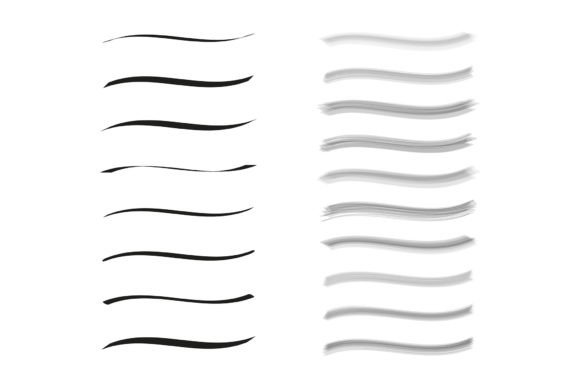
While both types of brushes add organic qualities, they serve different purposes. Understanding when to use each type is critical for achieving the desired effect. The calligraphic brushes are designed to mimic the angle and pressure of a nib pen. They are ideal for sharp entrances and exits, varying line weights, and fluid connections between letters. These are your go-to tools for headlines, signatures, and any element where elegance and rhythm are paramount.
In contrast, the bristle brushes focus on texture and coverage. They simulate the friction of hair bristles against paper, creating broken lines, speckles, and uneven edges. These are less about precision and more about atmosphere. Use them for shading, adding grit to a poster design, or creating abstract backgrounds that complement cleaner foreground elements. Combining both types in a single illustration can create a dynamic contrast between refined lettering and raw, expressive imagery.
Technical Considerations and Workflow Integration
Before diving into a project, it is important to consider how these brushes interact with your existing setup. Since the set includes files in AI and EPS formats, compatibility is broad, covering Adobe Illustrator CS6 and all newer versions. However, users should be aware that vector brushes behave differently than raster brushes in Photoshop. In Illustrator, the appearance is applied to the path, meaning you can edit the underlying shape after applying the brush style. This non-destructive workflow is a significant advantage, allowing for endless tweaking without starting over.
Another consideration is file size and performance. High-detail brushes with complex texture patterns can increase the computational load on your system. It is advisable to keep your artwork organized in layers and only apply detailed bristle effects to visible areas. Additionally, because these are vector-based, the "texture" is simulated through overlapping shapes or opacity masks rather than actual pixels. This ensures print-ready quality but requires a good understanding of how Illustrator renders appearances.
Maximizing Creative Potential
To get the most out of this set, experiment with blending modes and transparency settings. A bristle brush stroke might look too harsh on its own, but when set to "Multiply" or reduced in opacity, it can create subtle shadow effects that add dimension to flat designs. Similarly, calligraphic strokes can be expanded and modified using the Direct Selection Tool to customize individual serifs or terminals, giving you full ownership over the final letterform.
Ultimately, the value of a Calligraphic Bristle Brush set lies in its ability to save time while enhancing quality. Instead of spending hours manually drawing texture or searching for the right stock element, you have a curated library at your fingertips. This efficiency allows you to focus more on composition and concept, rather than getting bogged down in technical execution. For anyone serious about digital illustration, lettering, or design, integrating these tools is a step toward more expressive and compelling visual communication.